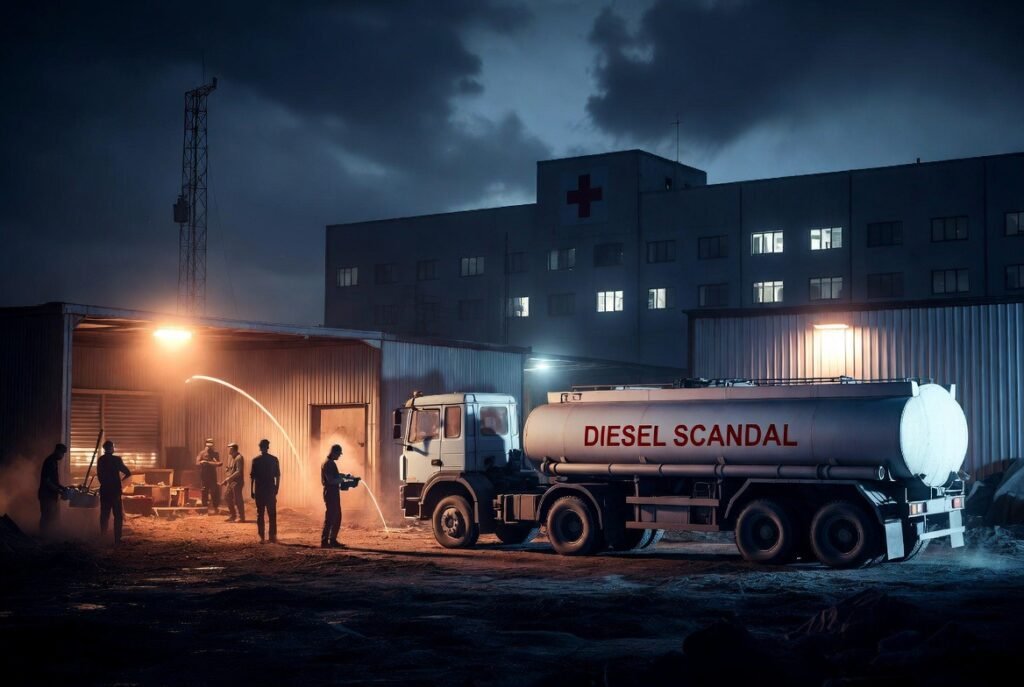
Exclusive Investigation | Special Sources from Inside Gaza
Exposing the Diesel Scandal: How Fuel Intended for Hospitals and Bakeries Was Allegedly Diverted into a Secret Funding Stream for Hamas After the War
Gaza – August 2026
Amid the darkness that has engulfed the Gaza Strip in the aftermath of the war, where hospital generators fall silent and bakery ovens cease operating, an organized corruption network is allegedly feeding itself at the expense of civilians. Special sources, described as being from within aid distribution operations and from circles close to the de facto authorities in Gaza, have provided Horizon Levant with details of what they describe as a systematic scheme involving humanitarian diesel fuel that has allegedly become one of the movement’s principal sources of financing in the post-war period.
According to these sources, the story begins with Abnaa Sinai Company, which sells diesel fuel to international organizations at US$1.80 per liter. The fuel is officially designated for hospitals, bakeries, and emergency power generation facilities and enters Gaza as humanitarian assistance. However, the sources allege that once the shipments reach distribution points, a significant portion of the fuel disappears.
The sources, who requested anonymity for fear of retaliation, claim that groups affiliated with Hamas systematically seize large quantities of diesel immediately after their arrival. They allege that tanker trucks or storage facilities are emptied under the pretext of “security priorities” or the movement’s “emergency operational needs,” after which the fuel is redirected to an extensive black-market network operating in areas under Hamas’ control.
According to the allegations, the fuel is then sold at several times its original price. Diesel purchased for US$1.80 per liter is reportedly resold on the black market for prices reaching US$15 per liter or more, depending on scarcity and demand. The proceeds are alleged to flow directly into Hamas-controlled funds, where they are used to finance salaries for members, rebuild the organization’s infrastructure, procure equipment, and maintain its security and economic control over the Gaza Strip.
One source, who said he has worked in humanitarian aid distribution for several years, told Horizon Levant:
“Hospitals are waiting for diesel to keep operating rooms and oxygen generators running, and bakeries are forced to stop baking, while we watch the very same fuel trucks being unloaded into private warehouses. This is not random theft. It is a system. Hamas controls everything that enters Gaza, and humanitarian aid has become another resource for financing itself after its traditional funding sources dried up.”
Additional sources inside Gaza described the alleged process as follows:
- The company sells diesel to international organizations at the agreed humanitarian price.
- International organizations allocate the fuel to officially designated beneficiaries.
- Hamas-affiliated personnel allegedly intervene during the distribution or storage stage, taking advantage of their security control.
- The diverted fuel is allegedly resold on the black market through known intermediaries, while traders who refuse to cooperate are reportedly subjected to protection demands.
According to the sources, the consequences on the ground are severe. Unofficial field reports describe prolonged shutdowns of bakeries and dramatic increases in fuel prices for ordinary civilians. Instead of alleviating suffering, the sources allege that humanitarian assistance is being transformed into a mechanism that both deepens the humanitarian crisis and finances those exercising control over the territory.
The sources further contend that this model is not entirely new but has become significantly more organized since the war. They allege that after previous funding streams were disrupted, Hamas increasingly turned to exploiting humanitarian supplies entering Gaza. Diesel fuel, being an indispensable strategic commodity, has allegedly become one of the movement’s most valuable resources.
Horizon Levant said it sought comment from Hamas officials as well as representatives of the relevant international organizations but had not received any response by the time of publication. Hamas had also not issued any official statement addressing these allegations.
The investigation remains ongoing. According to Horizon Levant, its sources have indicated that additional details and supporting documents may be released in the coming days.
The central question, the report concludes, is no longer simply who is allegedly diverting humanitarian diesel, but how long such a system can continue to deprive Gaza’s civilians of essential humanitarian assistance while allegedly using it as a source of financing.
Special Report – Horizon Levant
Special Sources Inside Gaza
August 2026